House Hacking In The Denver Metro: Strategies For New Investors
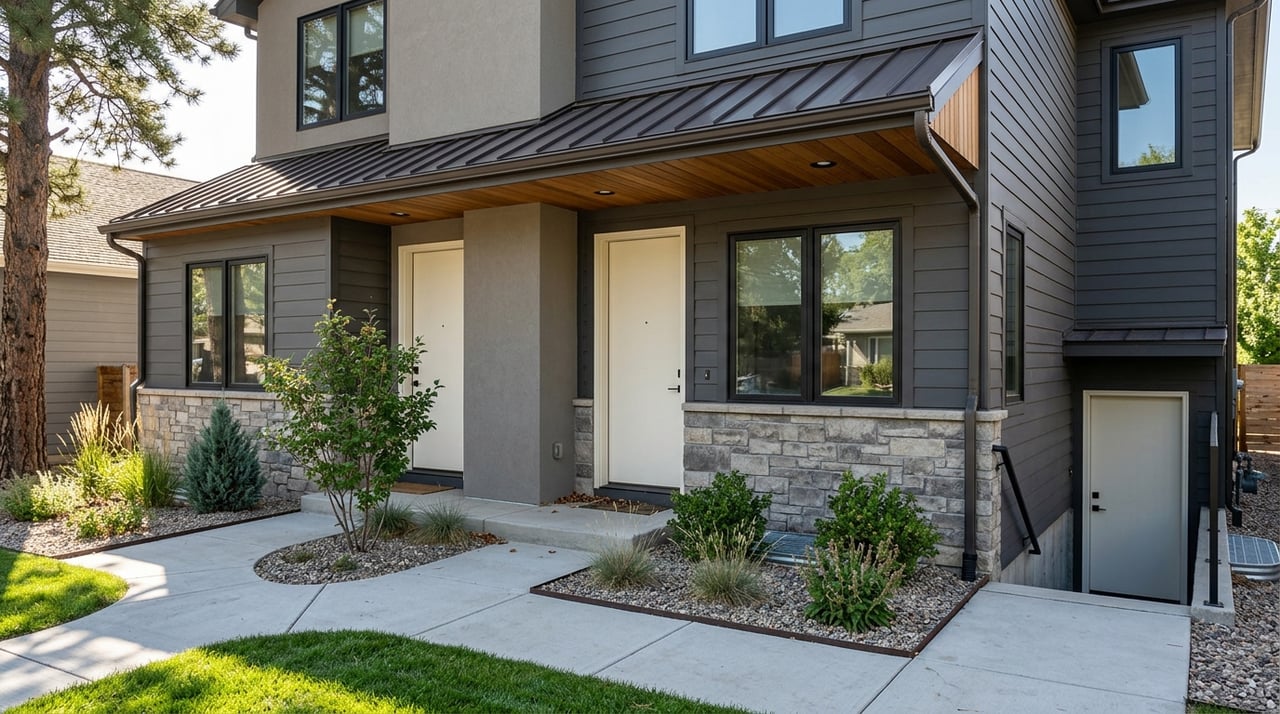
Thinking about buying in Denver but feeling priced out of the idea of owning and investing at the same time? House hacking can be a practical way to get into the market by living in your property and using rental income to help offset your monthly costs. In a metro where prices are still substantial, this strategy can make ownership feel more workable if you plan carefully. Let’s dive in.
House hacking works best when rental income can take some pressure off a high monthly housing payment. In the Denver metro, that pressure is real. According to the April 2026 DMAR report, the median close price was $605,000, median days in MLS was 14, and median rents were $1,495 for multifamily units and $2,753 for single-family rentals across the 11-county metro.
That mix creates a useful middle ground for first-time investors. Denver is not a low-cost market, so the rent matters. At the same time, the market data suggests a more stable environment than a runaway one, which means house hacking is often less about finding a perfect bargain and more about choosing a property where the numbers can support your lifestyle and long-term goals.
At its core, house hacking means you live in one part of the property and rent out another part. That could mean renting a bedroom, occupying one unit of a duplex, or adding a separate ADU later. The goal is simple: reduce your out-of-pocket housing cost while building equity in a property you own.
For new investors in Denver, the strategy usually falls into three common paths. Each has different financing, zoning, and licensing considerations, so the right fit depends on your budget, timeline, and comfort level.
These are often the most straightforward house-hack options because the setup is built in. You live in one unit and rent the others. That gives you clearer separation between your living space and rental space, which many first-time investors find easier to manage.
Financing can also be more favorable than many buyers expect. FHA loans can be used on one- to four-family owner-occupied principal residences, with down payments as low as 3.5 percent. Freddie Mac also offers mortgage products for owner-occupied two- to four-unit primary residences.
For planning purposes, the 2026 Denver County conforming loan limits are:
Those limits help explain why small multifamily properties can still be realistic targets in a market that feels expensive. They do not guarantee approval, but they do show that many Denver-area house-hack purchases may still fit within common financing ranges.
If you are new to investing, this may be the easiest place to start. You buy a single-family home, live there, and rent out a bedroom or other space to help cover your payment. It can be a lower-friction way to test whether you actually enjoy managing rental income while still keeping your first purchase relatively simple.
In Denver, there is also an important licensing distinction. If you live on site and rent a room or space that does not have its own kitchen and bathroom, the city says you do not need a residential rental license. That can make a room-rental strategy more accessible for buyers who want to start small.
This approach can offer more privacy and stronger rent potential than a room rental. In Denver, ADUs can take several forms, including basement conversions, attached additions, garage apartments, or detached backyard units. A basement apartment with a separate entrance, kitchen, and full bathroom may also function similarly to an ADU from a house-hacking perspective.
Denver’s citywide ADU measure took effect on December 16, 2024, and the city says it allows ADUs in all residential areas of the city, expanding eligibility to about 70 percent of Denver land. That broader access creates more opportunities for buyers who want to purchase with future rental flexibility in mind.
A good house-hack deal is not just about the price or the projected rent. In Denver, you also need to confirm what the property can legally support. That means checking zoning, permit requirements, and rental licensing before you write an offer or commit to a renovation plan.
If you are considering adding an ADU later, start with the parcel itself. Denver says ADUs are allowed in all zone districts that allow new single-unit dwellings, but they still require a formal process. The city states that ADUs must be built by a licensed contractor, need their own address, and require zoning, building, and sewer use and drainage permits.
The city also requires a certificate of occupancy before the ADU can be lived in. In single-unit zone districts, the owner must live in the main house when applying to build the ADU. Denver also notes that the ADU can still be used later if the owner eventually moves off the property.
Rental licensing is one of the most important local checkpoints for Denver buyers. The city requires a residential rental license for any building, structure, or ADU rented or offered for rent for 30 days or more. The license is valid for four years unless ownership changes.
Denver lists a $50 application fee, plus a $50 license fee for a single dwelling unit or $100 for properties with 2 to 10 units. If you are only renting a room without a separate kitchen and bathroom, that setup is exempt from the rental licensing requirement.
City rules are only part of the picture. Denver says it does not control HOA or metro-district bylaws. That means private rules can still affect whether an ADU project or similar use is allowed, so you need to review both public zoning and any private covenants tied to the property.
One of the biggest mistakes new investors make is focusing too much on the mortgage alone. House hacking is meant to help with affordability, but the rental income often offsets only part of the total cost of ownership. In Denver, where prices remain meaningful, your monthly budget needs to be grounded in the full carrying cost.
A practical budget should include:
This is where house hacking becomes a planning strategy, not a shortcut. If the rent helps reduce your monthly burden and you can still comfortably carry the property during repairs, vacancy, or turnover, the setup is much more likely to support you over time.
| Strategy | Best for | Key upside | Key watchout |
|---|---|---|---|
| Duplex, triplex, or fourplex | Buyers who want built-in rental units | Clear unit separation and owner-occupied financing paths | Higher purchase price and more complex underwriting |
| Single-family with room rental | First-time buyers testing the strategy | Lower barrier to entry and possible licensing exemption | Less privacy and lower rental income |
| Single-family with ADU or basement apartment | Buyers planning for long-term flexibility | More privacy and potentially stronger rent offset | Zoning, permits, licensing, and project costs |
This is one of the most common questions for Denver buyers, and the answer usually comes down to financing, zoning, and expected rent. Owner-occupied two- to four-unit properties often fit more neatly into FHA and Freddie Mac pathways. A one-unit home with an ADU may be a better fit if you want a traditional home today with the option to create added income later.
There is also a financing difference to keep in mind. Fannie Mae states that ADUs can be financed through standard purchase or refinance loans, HomeStyle Renovation, or construction-to-permanent financing. It also notes that ADUs are not eligible with a two- to four-unit dwelling, so buyers typically need to choose between a small multifamily path and a one-unit-plus-ADU path.
If you are just starting out, the most realistic move is often the one that keeps your risk manageable. For some buyers, that means a room rental in a single-family home. For others, it means a duplex where the layout is already set up to support separate living spaces.
The right property is not always the one with the highest possible rent. It is the one that fits your financing, aligns with Denver’s local rules, and leaves enough room in your budget for repairs, licensing, and the normal surprises that come with owning a home.
In a market like Denver, house hacking can be a smart entry point if you treat it like a long-term plan instead of a quick win. If you want help comparing Denver-area options and evaluating what fits your budget and goals, Savvy Property Group can help you navigate the process with clear guidance and local market insight.
From our upscale and extensive marketing and home staging services on our listings, to our individually tailored home-buying services and our expertise in real estate negotiations, we want you to have a 5-star experience working with us. We are proud to say that is what we have consistently delivered, and as a result have worked with many of our clients in multiple transactions over the years.